
The Ongoing Bombardment of Gaza and Escalating Aggression in the West Bank
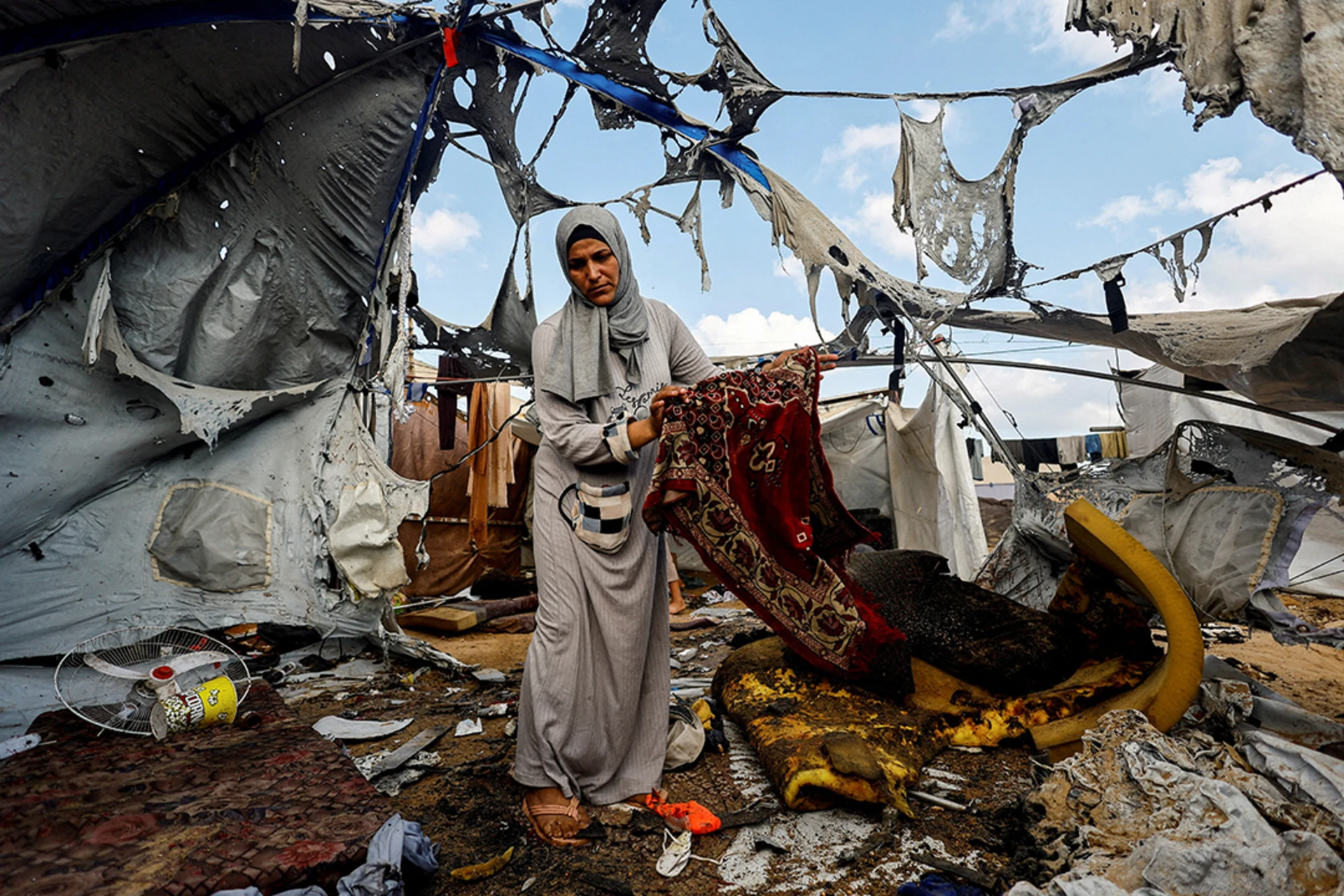
Nine months after a ceasefire was announced and endorsed by the UN Security Council, the guns still sound in Gaza, and the promise made to the Palestinian people has not been kept.
The bombardment continues. In mid-July, Zionist airstrikes killed a dozen people in two days, including women and children and six police officers struck at a station in the Jabaliya refugee camp. Days later, an airstrike on a house in Gaza City’s Sabra neighborhood killed a father, a mother, and their four children together, their house set ablaze around them. Earlier in the month, a strike hit a tent sheltering displaced families in al-Mawasi killing several people, including a ten-year-old child. Since the so-called ceasefire took effect, Gaza’s Health Ministry has recorded over a thousand people killed. This is a ceasefire in name only. The killing continues in practice.
The people of Gaza have been abandoned to slow starvation. The humanitarian relief promised alongside the ceasefire never materialized at the scale needed. Aid agencies now warn that up to two-thirds of Gaza’s population could face acute hunger again by the end of this year as funding for relief operations are cut. Families remain displaced, living among the ruins of their homes without clean water or reliable sanitation. With most of the population unemployed, people cannot feed their children, let alone rebuild their lives. A ceasefire that leaves a population to starve is not peace. It is the continuation of siege by other means.
At the same time, the West Bank is burning, as it has been burning for years. Settler aggression against Palestinian communities is not a recent development. It has escalated year after year: 1,291 recorded settler attacks in 2023, rising to 1,449 in 2024 and 1,835 in 2025. The average has climbed to roughly 190 attacks a month in 2026 alone. Palestinian villages across the West Bank have lived under the daily reality of incursions, land seizures, and violence carried out by armed settlers. This is a pattern rights groups have documented for years, with attackers often supported by the zionist army and rarely if ever prosecuted.
Palestinians taking a defensive stand against these incursions onto their own land has been met not with mass reprisal. In recent days, settlers have launched a wave of attacks across Palestinian towns and villages; torching mosques, setting fire to houses and vehicles, and spray-painting threats of revenge on the walls of Palestinian houses. This is the latest chapter in years of settler violence. When it is met by communities defending their own land it is ofter followed by collective punishment. Settler violence is now the leading cause of Palestinian injury in the occupied territory, carried out with total impunity.
This aggression is not spontaneous. It is sponsored. In recent days, senior members of the Israeli government have publicly demanded the destruction of Palestinian villages. National Security Minister Itamar Ben-Gvir called for a Palestinian village to be leveled as Gaza’s Beit Hanoun was leveled. Finance Minister Bezalel Smotrich, who also oversees settlement policy, called for Palestinian villages to be flattened like the refugee camps of Nablus and Tulkarem were during a 2025 military operation. That military operation was found by Human Rights Watch to amount to war crimes and ethnic cleansing.
These voices are not fringe voices shouting from the margins, they sit in the governing coalition. Under their watch, settlement expansion has reached record levels: 86 new outposts approved in a single year, funded directly by the occupation state. When the architects of zionist policy speak the language of ethnic cleansing the violence carried out on the ground is not an aberration. It is the policy working as intended, and it has been years in the making.
This machinery of dispossession and aggression extends into the prison system itself, which functions not as law enforcement but as a weapon aimed at decapitating Palestinian political life. More than 9,600 Palestinian political prisoners are held in Israeli jails, nearly half without charge or trial, detained indefinitely on secret files neither they nor their lawyers are permitted to see. This is not incidental repression, it is strategy: Marwan Barghouti, Ahmad Sa’adat, Khalida Jarrar. Walid Daqqa, a writer and revolutionary thinker, died in April 2024 after 38 years behind bars, denied the medical care that could have saved him.
Children are not spared: Ahmad Manasra was held in solitary confinement for years as a minor. He was only one of hundreds of Palestinian children processed annually through the only military court system in the world built to try children. It is a colonial technology built to break collective memory, sever leadership from movement, and render an entire people governable through permanent captivity.
We reject the fiction of a ceasefire that exists only on paper. We reject a humanitarian response that keeps a population perpetually on the edge of starvation instead of doing away with it. And we reject the normalization of settler terror carried out with the encouragement of the very government meant to prevent it.
We call for:
- The genuine, verified implementation of the Gaza ceasefire, an actual end to strikes on civilians, not a rebranding of the same violence.
- Immediate, unrestricted humanitarian access to Gaza, sustained, funded, and safe, so that starvation is not used as a bargaining chip.
- An end to settler impunity in the West Bank, real prosecution of attackers, protection for Palestinian houses and places of worship, and accountability for those who incite this violence from positions of power.
- The Palestinian people cannot be free while their political leaders remain caged and restricted from political participation: free every political prisoner and guarantee political rights for Palestinian.
- International pressure and accountability, because a ceasefire that is not enforced is not a ceasefire, and a government that arms and funds the destruction of Palestinian life cannot be allowed to do so without consequence.
The people of Palestine deserve more than broken promises. They deserve safety, dignity, and justice, and we will not stay silent while these are denied to them.
The struggle for a free Palestinian continues.