
Women on the frontlines of liberation: Against zionism, militarism, and patriarchy
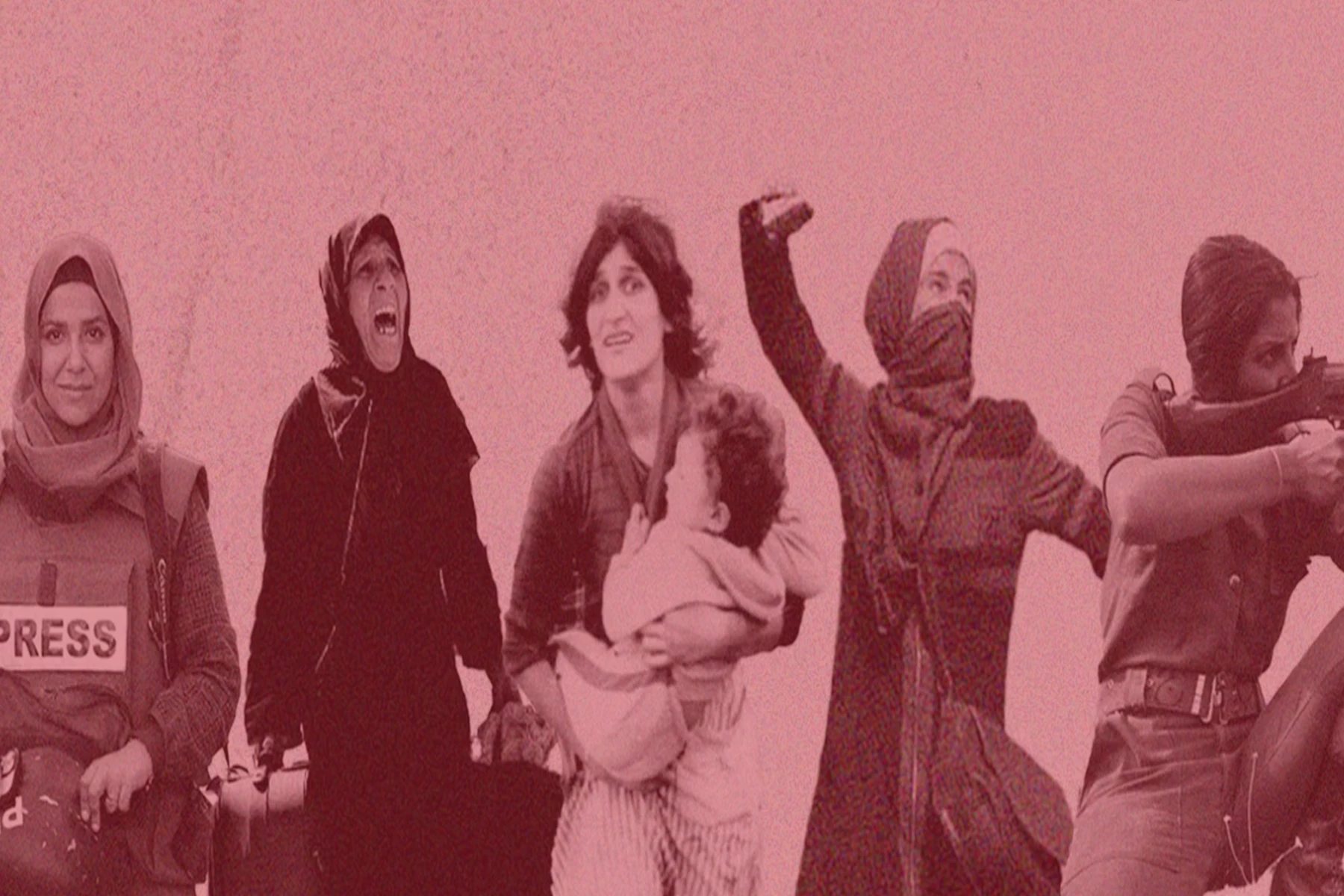
On the 25th of November, the world commemorates the International Day for the Elimination of Violence Against Women, the anniversary of the martyrdom of the militant sisters Patria, Minerva, and María Teresa Mirabal in 1960, who confronted a brutal and bloody dictatorship with their own bodies. This day is not merely a symbolic moment; it is a reminder that violence against women is not an individual incident or an isolated behavior, but a structural system of political, social, and economic violence that women confront daily in an open struggle against systems of oppression and exploitation.
This year, the day arrives amid tragic conditions in which the situation of women in the Arab and Maghreb region continues to deteriorate due to the dependent economic and social policies of political regimes and the dangerous assault on the rights and gains women have wrested through decades of struggle and sacrifice. The region is witnessing arbitrary arrests, kidnapping, displacement, and a systematic attack on public freedoms, alongside rampant corruption and authoritarianism, further compounded by dangerous military incursions. Many regimes are also engaging in normalization and submission to imperialist and Zionist projects, deepening the suffering of the peoples and reinforcing the structures of violence against women.
At the forefront of the struggle stand the women of Palestine, who confront with their bodies and their lives an occupation machine that grows more barbaric by the day. Palestinian women today fight an existential battle against a systematic project of ethnic cleansing, where bodies are besieged as the land is violated, and an entire society is targeted. Despite the horror of the massacres, Palestinian women stand in the front lines, leading popular resistance, bearing the burden of protecting families and communities, and continuing life amid devastation as an ongoing act of resistance.
In Sudan, tragedy is embodied in scenes of mass displacement, rape used as a weapon of war, and the collapse of living conditions amid a bloody struggle between forces competing to divide the country and seize power at the expense of the people and its women, with blatant support and intervention from imperialist powers. Despite this, Sudanese women continue to shoulder their responsibilities in protecting life, organizing local and regional initiatives, and defending the right to peace and dignity, working toward building a national civil state. In Iraq, Lebanon, and other countries, war, corruption, sectarianism, and economic collapse continue to reproduce violence against women as an unending daily tax. Lebanese women, in particular, endure the consequences of the Zionist entity’s ongoing war on the south and on civilian infrastructure, accompanied by displacement, terror, and the absence of security, making their struggle for freedom and dignity an essential part of the battle for national and social resilience.
Across the region, women also face worsening levels of poverty, unemployment, illiteracy, and lack of health services, along with rampant forms of social, cultural, and political violence fed by entrenched patriarchal structures and traditions that justify discrimination under the guise of “custom” and “culture,” within authoritarian systems that deepen repression and exploitation of women on all levels.
Facts confirmed by official and field data, make clear that violence against women is not a coincidental phenomenon but a result of a capitalism, class-based structure that systematically reproduces oppression. It is violence from which dependent regimes and transnational monopolies benefit, institutionalizing it through austerity policies, debt, plunder of peoples’ resources, destruction of public services, and support for authoritarian regimes.
The rush of many regimes in the region toward normalization, and their submission to imperialist and Zionist powers, is nothing but a deepening of the system of oppression and a reinforcement of dependency. Normalization is not a diplomatic step, as it is marketed; it is an explicit betrayal of the Palestinian cause and a desperate attempt to shield regimes from their own peoples by strengthening repressive apparatuses that become tools of systemic violence against women and against society at large.
The elimination of violence against women cannot be achieved without a multi-front struggle:
We, the political and feminist organizations participating in the IPA in the Arab and Maghreb region, as we salute the steadfastness of women everywhere and their struggles for a more just, equal, and free life, declare the following:
International Peoples’ Assembly – Arab and Maghreb Region
Women’s group