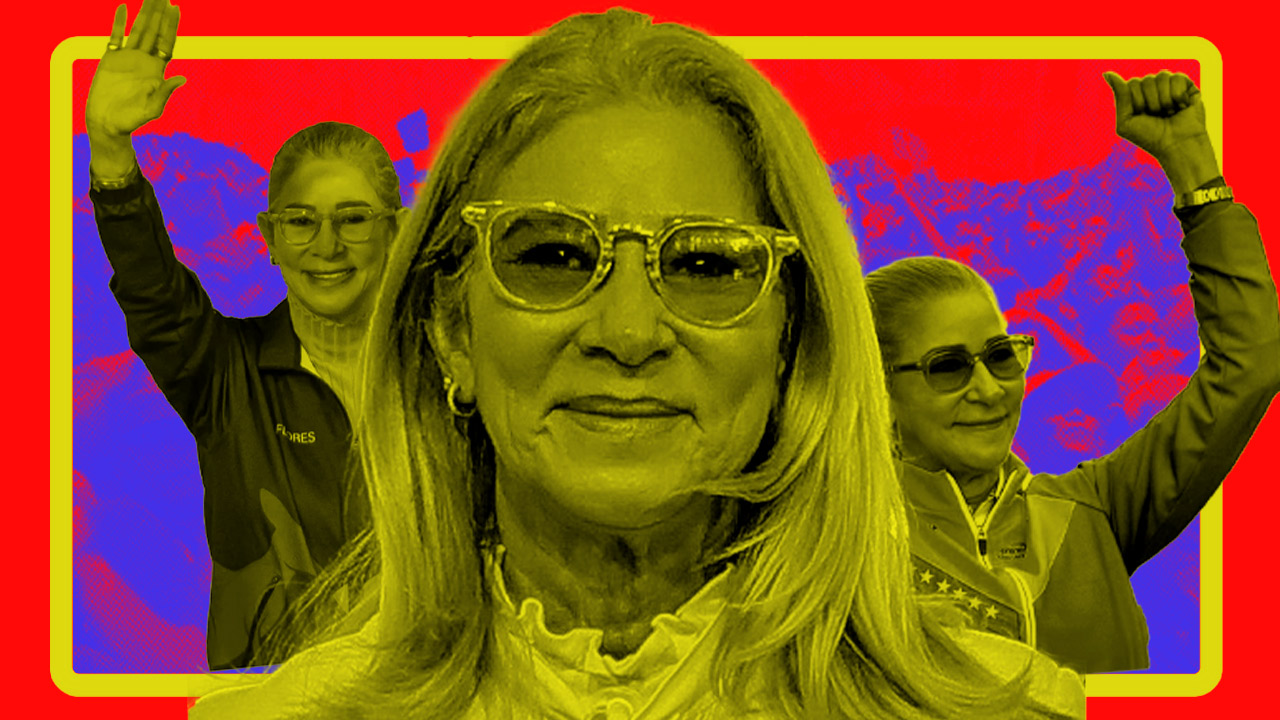
Anti-imperialist Feminists, stand with Cilia!
The regional landscape is undergoing a critical phase of imperialist and neocolonial discipline. We are witnessing a coordinated deployment of military, political, financial, and technological control over our territories, aimed at undermining popular sovereignty and subordinating life itself to the dictates of hegemonic powers and transnational corporations.
This scenario of imperialist reinforcement is characterized by an explicit display of coercion, in which the militarization of daily life and the geopolitical projection of overt force take center stage. In addition to maintaining financial and diplomatic mechanisms of domination—particularly in the Caribbean basin—it is articulated through direct interference, the constant threat of invasion, and the instrumentalization of the “narco-terrorism” narrative as a tool of political blackmail against those who resist the project of neocolonial subjugation. Political violence and armed control over territories, as well as the demand that women return to the submissive role of the “traditional order,” and the advance of religious doctrines aligned with the far right into the political and community spheres, do not function as anomalies, but rather as the indispensable material condition for disciplining populations, dismantling local resistance, and ensuring control over strategic resources.
All of this is combined with a web of hybrid wars employing mechanisms of economic suffocation that strangle sovereign states through the political use of illegitimate debts and unilateral coercive measures mislabeled as “sanctions,” which fall directly on households, undermine working conditions, and jeopardize daily life and the future.
At this crossroads, it is essential to reclaim and strengthen an anti-imperialist perspective rooted in feminism—one capable of taking up the non-negotiable defense of life and territories in the face of state repression and violence. We need to advance a political praxis that defends the land and our strategic resources in order to put them at the service of development centered on the true needs of our peoples, the preservation of our cultures, and the building of a dignified life. The accumulation of social mobilization and the power that the feminist movement has built in the streets over the past decades now give us the analytical depth and militant strength to interpret this new regional landscape. We knew how to denounce precarious conditions and violence in our communities; today, that same collective practice demands that we organize resistance against geopolitical aggression, recognizing that popular self-determination, sovereignty over our resources, and solidarity among peoples are the fundamental premises of our emancipation.
January 3 marks an unavoidable turning point in this new regional landscape: the military invasion of Venezuela and the kidnapping of President Nicolás Maduro and First Lady and political leader Cilia Flores accelerated a mechanism of direct intervention that shatters international law and continental sovereignty.
The abduction of Cilia Flores was not a tactical excess on the part of the occupying forces, but a deliberate act of political and gender-based intimidation. Holding a historic leader in inhumane conditions of confinement, overcrowding, and isolation—with a rapid deterioration of her health systematically denied by her captors—is the most brutal manifestation of how the empire exercises state-sanctioned political violence. They seek to break the body of a woman who embodies the leadership of a revolutionary process in order to send a message of intimidation to the entire continent: those who disobey colonial doctrine are punished without mercy and without safeguards. The violence of the economic blockade and the militarization of the territories is exemplified in Cilia’s imprisonment.
But this infamy is not new in the history of our America. The attack on Cilia bleeds from the very same wound through which flows the memory of the Mirabal sisters, massacred by the Trujillo dictatorship for sustaining political resistance. It is directly linked to the thousands of women comrades persecuted, imprisoned, and disappeared by state terrorism in our region, and it continues today in the bullets of hired killers and the lawfare waged against community and communal leaders, peasant women, union leaders, and environmental activists who defend the land and life.
In the face of this barbarism, we stand firm in the most combative feminist tradition of Our America: that of the women who, during the 1970s and 1980s, understood that emancipation was not negotiated in the offices of the empire, but was won alongside their peoples in the struggle for national liberation and in active resistance against military occupation and dictatorships.
We draw with deep admiration from the revolutionary work of Venezuelan women who, even today, continue to build communities and sow the seeds of resistance and popular feminism, as well as from the revolutionary teachings of Cuban women, who taught us that sovereignty is defended by organizing community work, health care, education, and culture—demonstrating that the dignity of the people is the most impenetrable wall against any colonial aggression. Today we denounce the criminal blockade imposed by the United States against the Cuban people as a veritable prolonged genocide—a planned strangulation aimed at subjugating, through hunger and scarcity, a generous nation that has been a beacon of international solidarity.
From that living memory, we have learned that feminist and anti-imperialist solidarity is not an abstract moral gesture, but a political, class-based, and militant praxis. Solidarity is the internationalist trench we build to break the blockade, to sustain life where death is imposed, to demand freedom, and to recognize that military and financial aggression against Venezuela or Cuba is a direct attack against all women and peoples of the “Nuestra América”.
On Thursday, October 8, a U.S. federal court rejected the request for house arrest submitted by the defense of lawmaker and First Lady Cilia Flores. Judge Alvin Hellerstein of the U.S. District Court for the Southern District of New York ruled that Flores must remain detained at the Metropolitan Detention Center in Brooklyn. The decision was based on the position of the U.S. prosecution, which argued that she posed a flight risk due to the First Lady’s close ties to the Venezuelan government. This situation only further violates international law, which was already breached from the moment she and the president were kidnapped. Cilia needs immediate medical attention due to her health problems. Since entering prison, she has lost 11 kilograms, suffered episodes of ventricular tachycardia and severe chest pain, lost two molars, and had to take four medications a day.
We, the feminist, grassroots, and anti-imperialist organizations, call for action and permanent mobilization under the following banners:
Immediate freedom for Cilia Flores and Nicolás Maduro!
Down with interference, blockades, and imperial control in Latin America and the Caribbean!
For the national liberation and internationalist solidarity of our peoples!