
The Conference of the Left in South Africa
By Vijay Prashad
Originally published at https://luciddialectics.substack.com/p/the-conference-of-the-left-in-south
(This essay is part 6 in a series called ‘The Working-Class Does Not Have the Time for Disunity’. You can read part 1 here, part 2 here, part 3 here, part 4 here, and part 5 here). More parts will appear in the next few weeks).
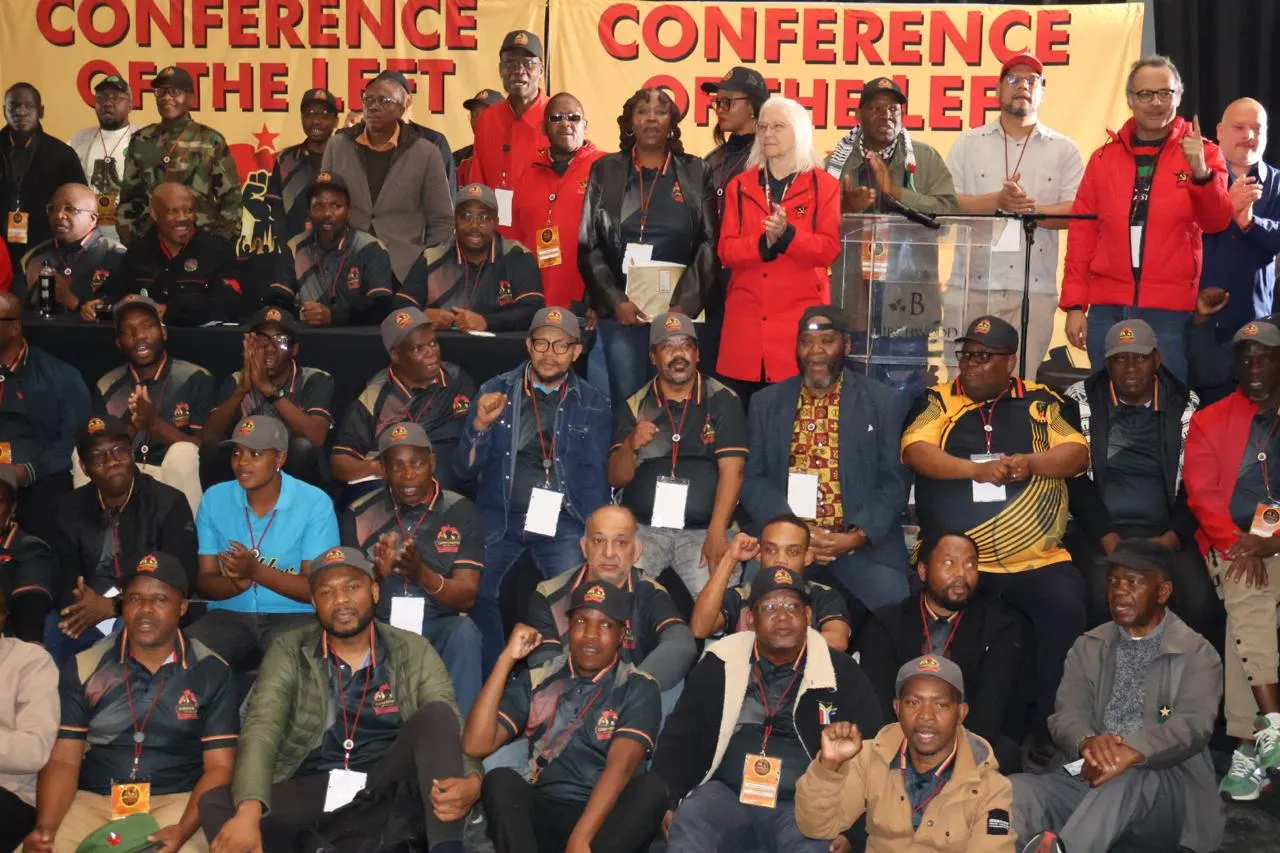
By itself, it was a feat to bring 103 organisations in South Africa together into a conference hall in Johannesburg for three days and to produce a final resolution to which they all agreed. The inputs from the parties and movements at this Conference on the Left in the last days of May clarified the crisis that has gripped South Africa and the world, crisis that includes an abysmal poverty rate globally and ugly warfare that seems unending. ‘We have not gathered to lament this crisis’, said the final declaration. ‘We have gathered to organise against it’. That was the hallmark of the conference: not a ‘talk shop’, as many of the delegates said from the podium, but a forum to deepen their capacity for political organisation of the working-class across the country and the continent.
The Conference of the Left was initiated by the South African Communist Party (SACP), but very quickly became a project of a steering committee that included a range of organisations (trade unions, Black Consciousness political formations, and breakaway groups from the African National Congress). Meetings across the spectrum of political organisations in South Africa became the method to invite them to come with an open mind to this gathering and to see if they could build a minimum programme of action through a Council of the Left.
Base in the Working Class
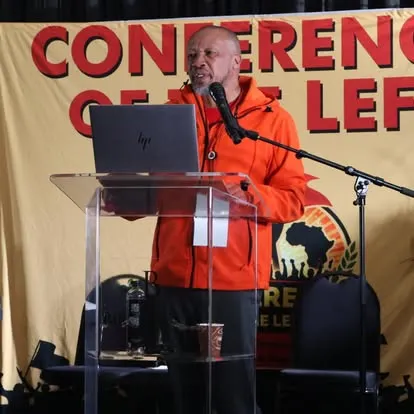
One of the most significant achievements of the Conference of the Left was that it succeeded in bringing together a wide range of political formations and social organisations rooted in the daily realities of the working class. In a period marked by fragmentation, demobilisation, and the proliferation of issue-based struggles that often remain isolated from one another, the conference created a space in which trade unionists, community activists, left political organisations, youth movements, women’s organisations, Black Consciousness parties, and other popular forces could engage in collective reflection. What distinguished this gathering from many previous attempts at left unity was not simply the diversity of its participants but the fact that the organisations represented had genuine social weight among workers, the unemployed, and the poor. The conference therefore reflected a living social base rather than an abstract ideological project.
The importance of this development cannot be overstated in the South African context. Since the end of apartheid, many of the institutions that once connected popular struggles to broader political projects have weakened or become disconnected from their constituencies. Communities have continued to resist evictions, unemployment, service delivery failures, and deteriorating living conditions, but these struggles have often remained localised. Chatting with people from different parties and movements made it clear that what drove them to the centrality of this meeting was to find a coordinated political response to the crises. They wanted a way to link their own experiences into a broader programme for social transformation. By creating a forum where organisations could identify common concerns and shared strategic objectives, it opened the possibility of rebuilding collective power from below.
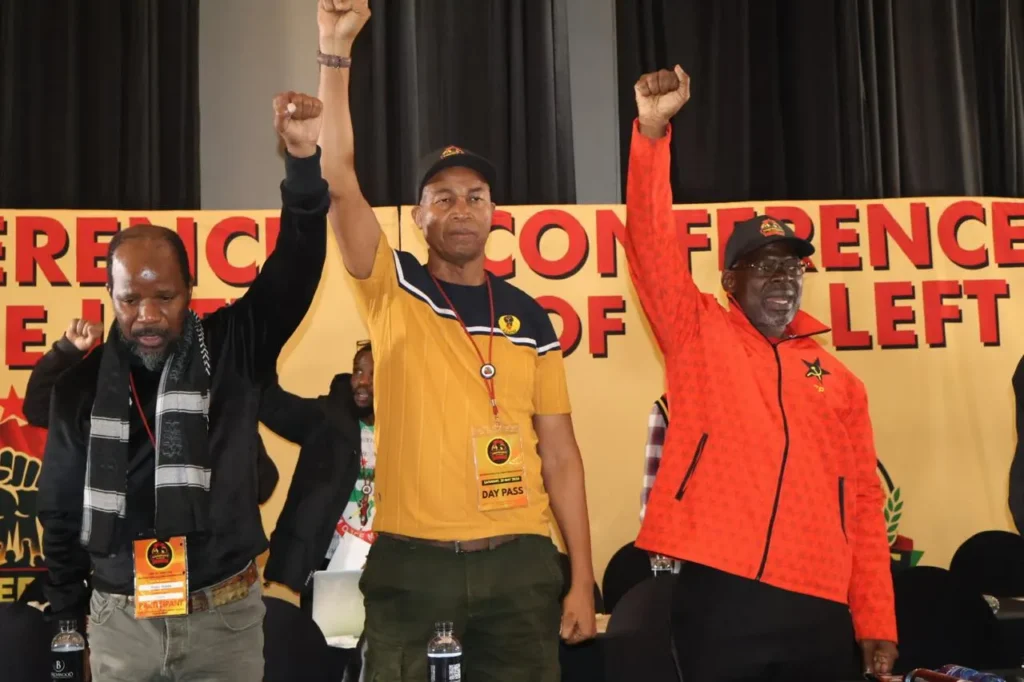
Equally important was the spirit in which these engagements took place. Rather than treating political differences as insurmountable obstacles, participants approached them as questions to be debated within a shared commitment to advancing working-class interests. This represented a departure from sectarian habits that have historically weakened the South African left. As the SACP General Secretary Solly Mapaila said, ‘We have differences, but we are not enemies’. The conference demonstrated that unity does not require uniformity, but rather a willingness to develop common action around concrete issues affecting ordinary people. In this sense, the gathering was not merely an event but an important step toward reconstructing a political and social bloc capable of challenging the entrenched power of capital and advancing an alternative vision for South Africa’s future.
Left unity is not important merely for itself. The key task is to unify the working-class and to enhance its confidence and clarity. The Left is the instrument for that unification and that mobilisation.
Anti-Capitalism
A second major contribution of the Conference of the Left was its willingness to confront directly the limitations of the neoliberal trajectory pursued by successive ANC-led governments. Rather than offering a superficial critique, participants examined how post-apartheid economic policy increasingly accommodated the interests of capital while failing to address the structural inequalities inherited from apartheid. The conference highlighted the extent to which market-oriented reforms, fiscal conservatism, privatisation, and the prioritisation of investor confidence have shaped public policy over the past three decades. While these policies were often justified as necessary for economic stability and growth, their practical effect has been the persistence of mass unemployment, deepening social inequality, and the continued marginalisation of the majority of South Africans.
Importantly, the conference rejected the argument that these concessions to capital were unavoidable. Participants argued that many of the policy choices made by the democratic state went far beyond what might have been required by existing economic constraints. Rather than using state power to transform ownership patterns, expand productive capacity, and deepen economic democracy, governments – which included ministers who answered to some of the parties in the room – frequently accepted the limits imposed by domestic and international capital as fixed realities. This acceptance narrowed the horizon of political possibility and weakened the transformative ambitions that had animated the anti-apartheid struggle. The result has been a profound contradiction between political liberation and economic exclusion, with millions continuing to experience poverty and insecurity despite the formal gains of democracy.
The significance of this critique lies in its insistence that alternatives remain possible. The conference did not simply catalogue policy failures; it sought to reopen discussion about development, public ownership, industrial strategy, labour rights, and democratic planning. In doing so, it challenged the widespread belief that there is no alternative to neoliberal orthodoxy. By placing the question of political economy at the centre of its deliberations, the conference reaffirmed a foundational principle of the left: that genuine freedom requires not only political rights but also the transformation of the economic structures that reproduce exploitation and inequality. This perspective provided an essential framework for thinking about the future direction of progressive politics in South Africa.
Xenophobia
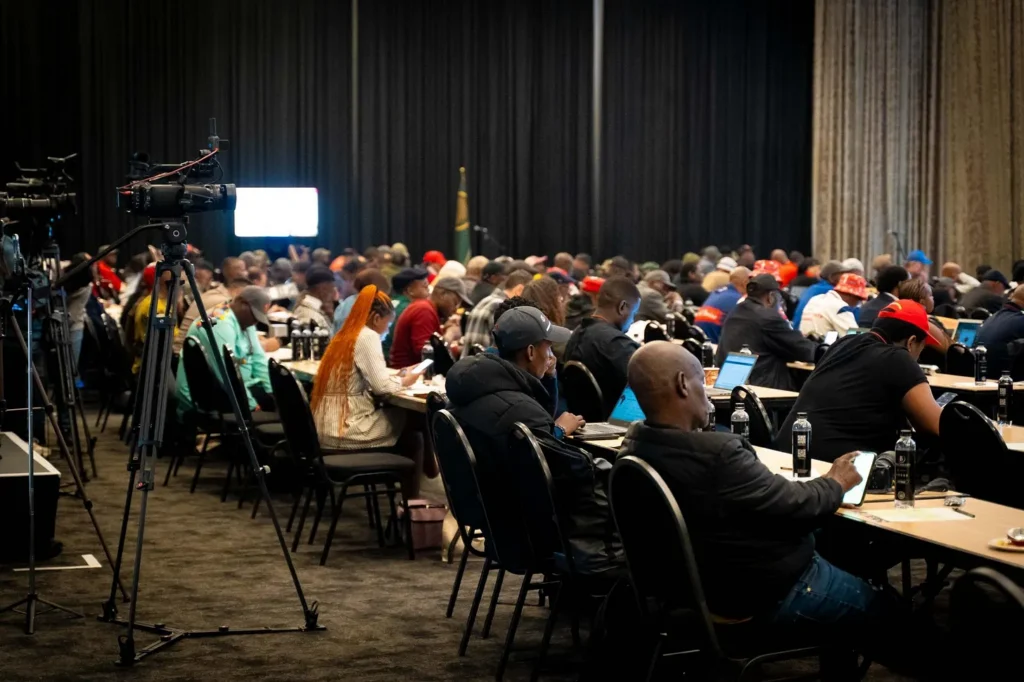
Perhaps one of the most politically mature discussions at the Conference of the Left concerned the question of xenophobia. Rather than approaching the issue primarily as a matter of moral condemnation, participants sought to understand its roots within the material conditions confronting working-class communities. South Africa’s recurring outbreaks of anti-migrant violence have often been accompanied by appeals for tolerance and coexistence, yet such appeals have rarely succeeded in addressing the deeper social and economic dynamics that generate resentment. The conference recognised that unemployment, precarious work, housing shortages, and declining public services create conditions in which frustration can be redirected toward migrants rather than toward the structures and interests responsible for social deprivation.
This analysis led participants to insist that xenophobia must be confronted through political organisation and class consciousness: every single political leader who spoke from the podium (from the uMkhonto we Sizwe Party to the Shosholoza Progressive Party) affirmed their opposition to xenophobia. Migrant workers and South African workers alike are subjected to exploitation by employers who benefit from divisions within the labour force. When workers are encouraged to view one another as competitors rather than allies, capital gains additional leverage to suppress wages, weaken labour organisation, and undermine collective resistance. The conference therefore argued that xenophobia cannot be defeated simply through appeals to morality; it must be challenged through systematic political education that clarifies the real sources of inequality and insecurity. Workers need to understand that migrants are not the cause of unemployment or poverty but are themselves victims of many of the same economic processes.
By placing class politics at the centre of the discussion, the conference advanced a perspective capable of building genuine solidarity across national boundaries. It emphasised that the working class is not defined by nationality but by its relationship to systems of exploitation and dispossession. The struggle against xenophobia is therefore inseparable from the struggle against capitalism, unemployment, and inequality. This approach offers a more durable basis for unity than humanitarian appeals alone because it connects solidarity to the material interests of working people. In doing so, the conference reaffirmed an internationalist tradition that has long been central to left politics and essential for building a movement capable of confronting the challenges facing South Africa and the wider African continent.
At one point the Dr. Ray Russen of the Shosholoza Progressive Party asked the uMkhonto we Sizwe Party (MKP) to clarify its engagement with the March on March xenophobic process. Nkosinathi Nhleko of the MKP said that they were merely talking to this organisation to see how is involved and what their objectives were. After some principled disagreements, all the parties agreed to remain in dialogue with each other. The final Conference resolution was clear: ‘Migration must not be used to generate Afrophobia, xenophobia or hatred against African and other migrant communities. The crisis was not created by migrants’.
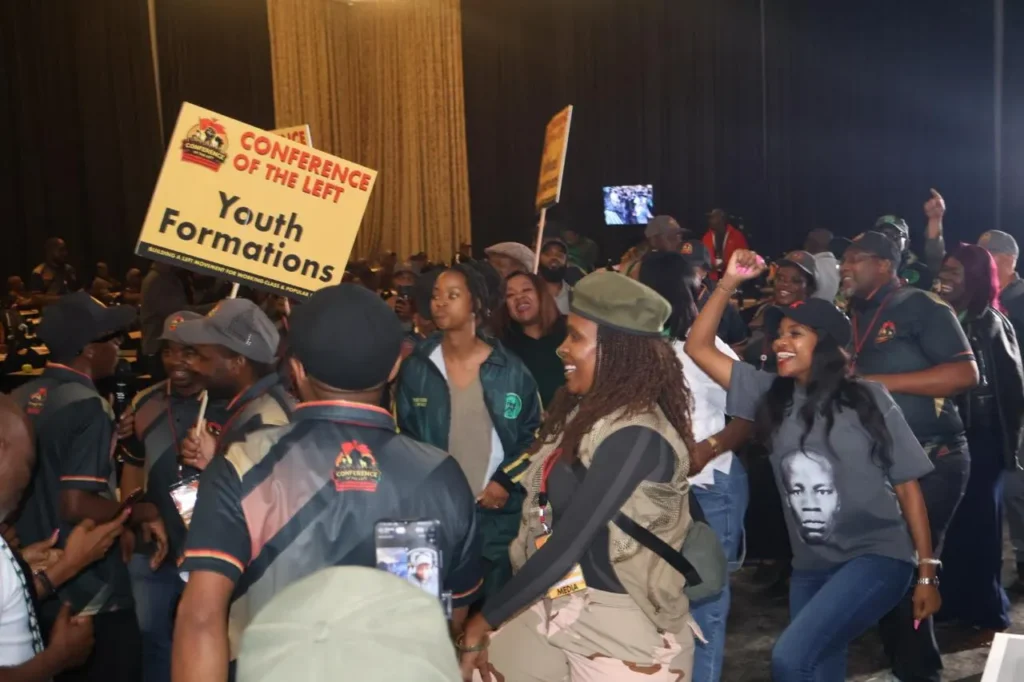
The Conference of the Left ended not with the triumphalism that often accompanies political gatherings, but with something more valuable: a sober recognition of the scale of the crisis and a renewed commitment to collective action. The significance of the conference lies not in any illusion that unity has already been achieved, but in the recognition that the social catastrophe facing workers, the unemployed, women, and the youth cannot be overcome through isolated struggles. The conference’s central achievement was to create a space in which the dispersed energies of parties that represented the South African working-class could begin to find common purpose.
At the final press conference, the Steering Committee insisted that the gathering had produced more than declarations. It had established the foundations for a durable process through the Council of the Left and a common programme of action. The Council has been formed ten years after the SACP resolved at its 14th Congress (2017) to establish a Left Popular Front. The challenge posed by the Conference of the Left is larger than electoral arithmetic. It is whether the working class and the poor can rebuild institutions capable of confronting concentrated economic power and recovering the unfinished aspirations of liberation.
Vijay Prashad is the Director of Tricontinental: Institute for Social Research. Sign up for the weekly newsletter from the institute, the most recent being on the concept of ‘slow to mature’ – about how revolutionary processes must hasten to develop institutions and capacity quickly in perilous circumstances.