Why We Continue to Support Venezuela
By João Pedro Stedile1
The current political situation in Venezuela cannot be explained solely by the events following January 3, 2026. We need to contextualize what has been happening over the past four decades. In the 1990s, the U.S. exercised total hegemony over the continent, imposing the NAFTA (North American Free Trade Agreement) on us and, subsequently, seeking to impose the FTAA (Free Trade Area of the Americas) as a zone under the total control of U.S. capital. All governments, except Cuba, supported this proposal.
But the people of some countries rose up. In Venezuela, there was the Caracazo in 1989; then, the military rebellion; and finally, Chávez’s electoral victory, which lead him to take power in 1999, breaking the neoliberal wave and ushering in a new cycle of progressive governments. His victory was followed by Luiz Inácio Lula da Silva (Brazil), Rafael Correa (Ecuador), Evo Morales (Bolivia), and Néstor Kirchner (Argentina). This wave altered the balance of power on the continent. Another integration initiative was proposed to replace the FTAA, which had been formally defeated in 2005, namely ALBA: the Bolivarian Alliance for the Peoples of Our America).
U.S. imperialism, Democratic and Republican administrations, and the U.S. ruling class did not forgive Chávez’s audacity and, for four decades, employed every possible tactic within the playbook described by researcher Andrew Korybko, based on official documents from the U.S. Armed Forces, as new tactics of Hybrid Warfare.
During this long period, they tried in every possible way to defeat the Bolivarian process in Venezuela. Let us recall the coup that removed Chávez from office for two days in 2002, when international outcry and immediate popular mobilization prevented the coup plotters from executing him. Remember that even the cardinal of Caracas had administered last rites to him in the prison on Orchila Island, where he was being held!
There was also a political strike by oil workers aimed at crippling PDVSA (Petróleos de Venezuela, S.A.), which caused fuel shortages and chaos. The situation was managed with the help of the then-government of Fernando Henrique Cardoso in Brazil. Then came the “guarimbas” with full-scale street violence and terrorism, including the burning of schools and hospitals, manufactured shortages, and dozens of deaths. Many of those responsible for these attacks were imprisoned and have now been granted amnesty.
Following Chávez’s death, the U.S. quickly recognized the puppet government of Juan Guaidó, to whom they transferred all of the Venezuelan state’s dollar and gold reserves, so that this Venezuelan lumpen bourgeoisie could enrich itself.
They triggered runaway inflation by manipulating the exchange rate from Miami. They froze all the country’s foreign accounts. They blocked oil investments, and production fell to levels below 30%, causing a 90% drop in GDP. All of this caused severe economic hardship for the entire population and led to an unprecedented exodus of Venezuelan workers.
They contested the reelection of President Nicolás Maduro, with the support and delusions of certain so-called progressive figures.
All of this was compounded by a constant and consistent media campaign, which certainly cost millions of dollars in the use of social media, computers, and so-called influencers paid by the CIA and its agencies. This campaign is still ongoing.
The final blow came with the second Trump administration. Thirsty for oil and losing its economic hegemony to Eurasia, the administration revived the Monroe Doctrine and, seeking to turn the continent back into the U.S. backyard, imposed economic, political, and military control.
On January 3, after mobilizing its entire military force, it invaded the country by air, kidnapping President Maduro and Member of the National Assembly, Cilia Flores. There was resistance, fighting, and more than 100 deaths. Only in a few years will we know how many American soldiers died. We only know that they were, for the most part, Latinos from the elite Delta Force unit, armed with the best weapons on the planet.
Venezuela, its people, and its armed forces were defeated. They lost lives and their president. But the empire had no one to put in Maduro’s place, as its agent Maria Corina Machado and the sellout opposition have no credibility in the eyes of Venezuelan society.
The solution was therefore to keep the president hostage and negotiate with the Chavista government, with a noose around its neck or a rifle aimed at his head. Some sectors of the institutional left and those who only follow politics on social media were quick to claim there was no resistance and to allege treason. Now, they are beginning to spread the idea that there is a rift between the governments of Venezuela and Cuba. These claims only reinforce U.S. tactics, disseminated by media outlets influenced by the CIA, to divide the left and public opinion.
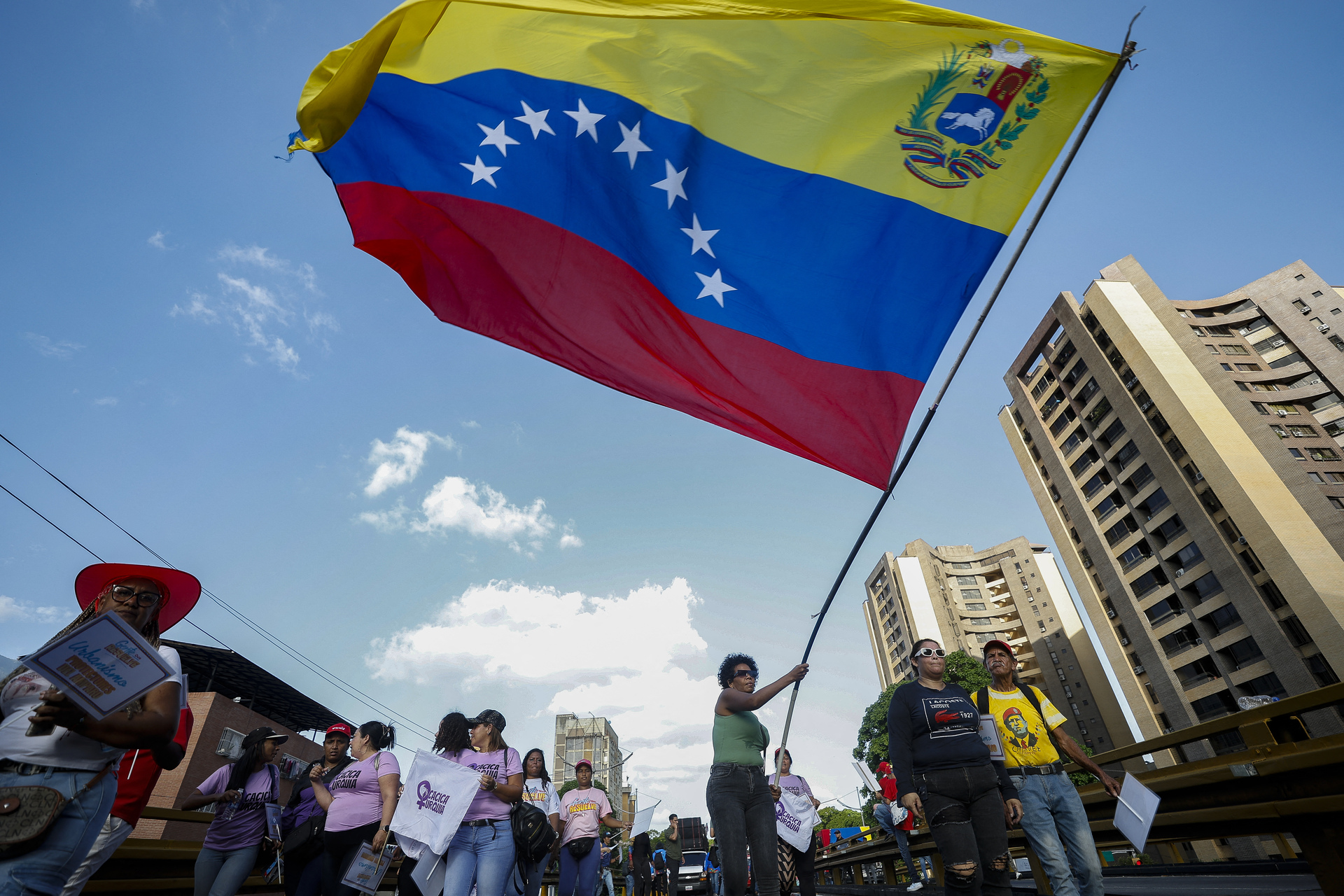
The Venezuelan people, the vast majority of whom are Chavistas, go about their lives, working, producing, and organizing in the communes. Though pained, they continue to support the Chavista government, fully aware of everything that has happened.
The MST has historical ties with the Venezuelan peasant movement, with the productive communes, and with the Chavista government. We have many cooperation projects in seed and food production, as well as exchanges for the training of technical staff.
We will be eternally grateful for the scholarships at the Salvador Allende Latin American School of Medicine, which allow dozens of poor young peasants to become doctors. The Venezuelan people continue to be victims of the empire’s hybrid war. The Chavista government has the support of its people. Our movement will always stand in solidarity with the Chavista people.
We need a shift in the international balance of power in favor of humanity and peace. We hope that the internal balance of power in the U.S. will change, and that progressive forces will succeed in changing its foreign policy – including its warmongering tendency to attack peoples – and in defeating the Monroe Doctrine.
We hope that the Chavista government and people will find the best ways to increase the production of oil and other goods they need. May they maintain sovereignty over their oil, minerals, and territory.
Defending Venezuela and Cuba is a moral and political obligation of all progressive and democratic forces on our continent. Make no mistake: if they are defeated, the empire will increase its pressure on Mexico, Brazil, Colombia, and the entire continent. Before, they used the specter of the communists and the USSR. Then they switched to Islamic terrorists, whom they financed. Now they have created the drug trafficking bogeyman—as if they weren’t the biggest market—and the repression of migrants.
We will fight for the release of President Maduro and Member of the National Assembly Cília Flores, as they have committed no crime and the U.S. has neither the right nor the moral authority to condemn them for anything. On the contrary, we hope that in the future the International Criminal Court in The Hague will try and convict the current U.S. leaders for their bombs and crimes in Gaza, Iran, Syria, Sudan, the Caribbean, Venezuela, Cuba, and within their own country, including for the persecution of the poor and migrants.
The history of the class struggle takes twists and turns, with ups and downs, advances and setbacks, but humanity will always move forward in building more just and egalitarian societies, with popular sovereignty and peace.
1 Member of the National Coordination of the MST; Leader of ALBA Movements and the International Peoples’ Assembly